The evolving EV ‘operating reality’
The coming era of commercial electric vehicles has been a bigger and bigger part of exhibitor enthusiasm and industry curiosity at the Work Truck Show since I first started attending some 15 years ago.
In recent years, EVs have been the centerpiece of big reveals from OEMs and body builders.
I’ll be curious to see what’s getting hyped this March in Indy, because enthusiasm—already somewhat tepid in the marketplace—seems to have waned. Not that the uptake ever met expectations: The roster of failed EV startups is significant.
But the Big Three have suffered, as well.
Most recent example: The much-ballyhooed all-electric Ford F-150 Lightning, launched in 2021, is no more—part of a decisive shift in Big Blue’s electrification strategy revealed in mid-December. In its place will be an F-150 with an electric powertrain supplemented by an on-board generator for extended range, with production details still to come. (And I expect we’ll hear more during Work Truck Week.)
The pivot is part of Ford’s planned “capital redeployment,” aimed at aligning production with “evolving customer demand.” Ford can survive a $20 billion bad bet on EVs, one assumes. But, lessons learned.
“This is a customer-driven shift to create a stronger, more resilient, and more profitable Ford,” Ford President and CEO Jim Farley said in the company’s statement. “The operating reality has changed.”
Allow me to emphasize: customer driven. That’s usually a big factor in business success, right?
Granted, for radical new products, there’s an adoption curve. It’s a pattern so common for emerging technologies that it has a name: the Gartner hype cycle. The hype curve tops out at the “peak of inflated expectations” before crashing into the “trough of disillusionment” when the new technology doesn’t live up to the expectations of early adopters.
During the ensuing free fall, many suppliers leave the market, survivors regroup and address customer concerns, and the technology begins a slow, steady climb to wider acceptance and adoption.


On the surface, EVs would seem to fit this hype cycle. Except for one thing: EVs really aren’t a new product. They are, essentially, vehicles. Period. They are built to do the same thing road vehicles have done for more than 150 years. Fun fact: The 1896 Armstrong horseless carriage was an early hybrid, combining an electric motor/battery and gas engine.
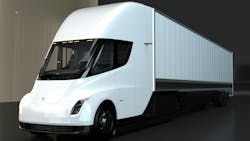
(For simplicity, let’s focus on commercial vehicles—that’s what we’re here for, and CV customers demand function over form, unlike many consumers on the automotive side. Case in point: I said similar things about the Tesla Semi—eight years ago. If building commercial-grade electric vehicles at scale and backing them with service were easy, and if there was charging infrastructure, we’d be much further along with the Semi. Yet Tesla sells millions of electric cars.)
I’ll even grant that commercial EVs, as a piece of hardware, are very good. But they are very expensive, and depend on a charging infrastructure that’s immature. So, in the U.S. and around the world, governments with an interest in promoting clean transportation are providing subsidies to help with both the upfront purchase price and infrastructure development. In a state-led economic system like China’s, this has spurred a rapid ramp up. In a democracy like the U.S., where policy is set by the White House and Congress, priorities can come and go.
For EVs, the federal priority to support them is gone (for now). And that means market forces will prevail.
In reality, the market already has decided on commercial EVs, of course, with a resounding wait-and-see. Sure, some businesses have sustainability goals and they’re willing to fund the expense of clean transportation. And EVs do work well in certain applications, though we’ll see how much the lack of government support complicates the ROI.
So, here’s what I’m looking for in 2026: On the light- and medium-duty side, I have high hopes for the new hybrids coming out and I’ll certainly ask, at WTW, why we didn’t just start there. On the Class 8 side, the ATA’s long-standing complaint will get some traction: the fastest, most affordable way to reduce truck emissions is to modernize the fleet with the latest, incredibly clean ICE powertrains.
And, for all highway trucks, Congress finally needs to repeal the FET. Clean trucks are also increasingly expensive, and the tax is a double burden for those who still want the EVs the global OEMs have invested heavily in.
And, while we’re modernizing the grid to support data centers, utilities need to prepare for all-electric trucks in advance of demand—but that’s a whole ’nother discussion. Happy New Year!
About the Author

Kevin Jones
Editor
Kevin has served as editor-in-chief of Trailer/Body Builders magazine since 2017—just the third editor in the magazine’s 60 years. He is also editorial director for Endeavor Business Media’s Commercial Vehicle group, which includes FleetOwner, Bulk Transporter, Refrigerated Transporter, American Trucker, and Fleet Maintenance magazines and websites.
Working from Beaufort, S.C., Kevin has covered trucking and manufacturing for nearly 20 years. His writing and commentary about the trucking industry and, previously, business and government, has been recognized with numerous state, regional, and national journalism awards.